The Enduring Majesty of the 1839 Una and the Lion Gold £5: Britain's Pinnacle of Numismatic Beauty
Among the vast tapestry of British coinage, few pieces command the same reverence and admiration as the 1839 Una and the Lion Gold £5. Hailed by experts and collectors alike as "the most beautiful of all English coins," this remarkable gold quintuple sovereign is more than just a piece of currency; it's a miniature work of art, a historical artifact, and a symbol of a nascent era. Its allure stems from a harmonious blend of unparalleled artistic genius, profound historical significance, and extreme rarity. To understand why this coin consistently holds its place at the apex of numismatic beauty, one must delve into its intricate design, its unique context, and its enduring legacy.
The Unrivalled Artistry of William Wyon: A Masterpiece in Metal
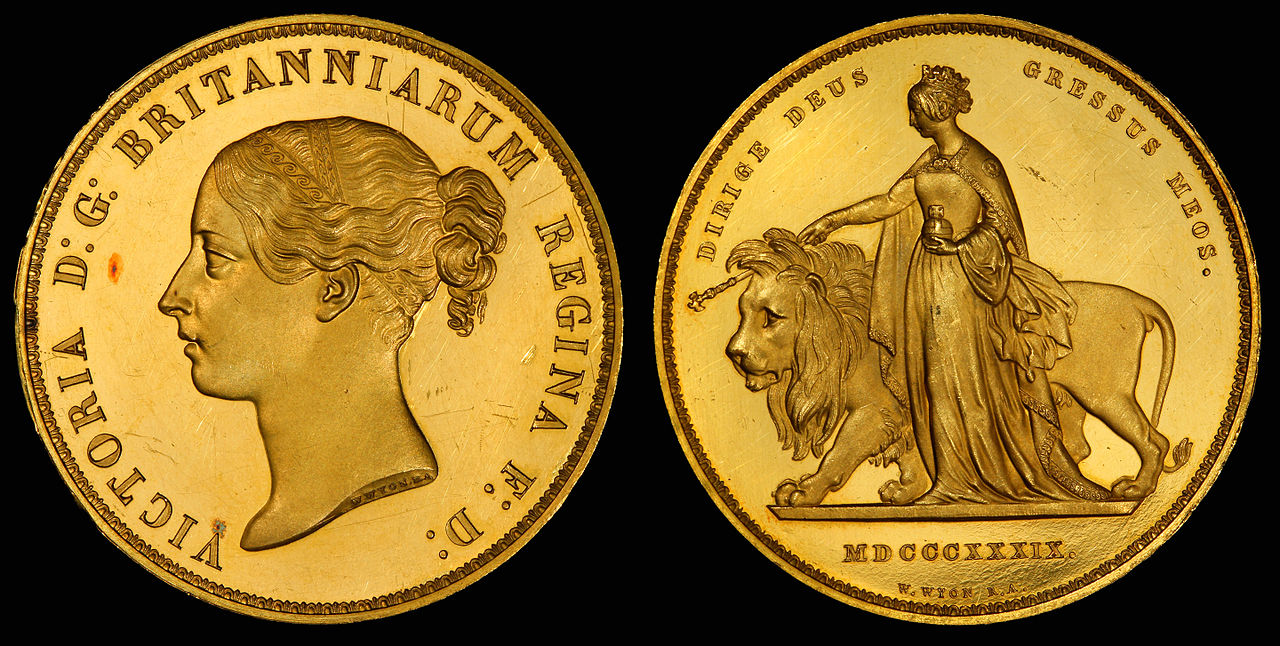
The primary reason for the 1839 Una and the Lion Gold £5's celebrated beauty lies undoubtedly in its reverse design, sculpted by the legendary Royal Mint engraver William Wyon. Wyon, whose name is synonymous with some of the most iconic British coinage, truly surpassed himself with this allegorical depiction. The coin portrays Queen Victoria as Una, a character from Edmund Spenser’s epic poem, *The Faerie Queene*. Una, representing truth and the Anglican Church, is shown gently leading a majestic lion, which symbolizes the British nation and its immense power.
This isn't merely a static image; it's a dynamic narrative imbued with profound symbolism. Una's serene expression and delicate posture, contrasting with the lion's powerful physique and calm demeanor, suggest the benevolent and graceful rule of the young Queen over a formidable empire. The intricate details are astonishing: Una’s flowing drapery, her sceptre held aloft, the lion’s meticulously rendered mane, and the Latin motto "DIRIGE DEUS GRESSUS MEOS" ("May God direct my steps") encircling the scene.
Wyon's masterful execution creates a stunning visual depth, particularly on proof versions, which often exhibit a "cameo" effect. This highly sought-after characteristic results from a deep contrast between the raised design (the relief) and the mirror-like field (background), making Una and the Lion appear to float above the surface with breathtaking clarity. The classical elegance, combined with the rich allegorical narrative, transforms a simple coin into a portable piece of sculptural art that captivates with every viewing angle. This artistic triumph sets it apart, ensuring its status as a timeless masterpiece. For a deeper dive into its specific features, readers can explore
The Iconic 1839 Victoria Una and the Lion £5 Gold Coin Explained.
A Symbol of a New Reign: Queen Victoria's Ascent
Beyond its aesthetic appeal, the 1839 Una and the Lion Gold £5 holds immense historical weight. It was the first five pound crown issued under Queen Victoria’s reign, which began in 1837, making it an immediate marker of a new era. What makes this coin even more historically significant is that it is the *only* five pound coin to feature the Una and the Lion motif. This exclusivity solidifies its special place in British numismatic history.
The coin's issuance in 1839, just two years after Victoria’s accession to the throne, positions it as an early and powerful declaration of her queenship. The allegorical design serves as a visual metaphor for the new monarch's reign – a young queen, guiding the mighty British Empire with grace and strength. This symbolism would have resonated strongly with her subjects, offering a vision of stability and prosperity for the future.
The obverse of the coin features William Wyon’s classic "Young Head" portrait of Queen Victoria, depicting her in her youthful prime, with a laurel wreath adorning her hair. This portrait itself became an iconic representation of Victoria throughout her long reign, further cementing the historical importance of this specific coin. The combination of this classic obverse with the unique, allegorical reverse creates a harmonious and historically resonant artifact that captures the essence of a pivotal moment in British history.
Rarity and Numismatic Appeal: More Than Just Beauty
While beauty is subjective, the rarity and demand for the 1839 British Gold Coin are objective measures of its extraordinary status. The £5 gold coin, or quintuple sovereign, was first issued as a pattern coin in 1820 under George IV, but only saw limited proof issues in 1826 and 1839 as part of complete proof coin sets. Crucially, 1839 was one of only three years (along with 1893 and 1902) where ordinary circulation types of the gold £5 were issued *in addition* to the proof versions. This combination of limited overall mintage and the existence of both proof and circulation strikes makes the 1839 Una and the Lion particularly scarce and highly sought after.
Proof coins, as the name suggests, are high-quality sample coins created ahead of a general issue, often with polished dies and specially prepared blanks. They were typically intended for collectors, dignitaries, or official presentations, not for general circulation. The meticulous production process ensures superior detail and finish, contributing significantly to their aesthetic appeal and market value. The "cameo" effect, often found on these proofs, further enhances their desirability.
The scarcity of both proof and normal versions, coupled with the coin's artistic and historical significance, translates into formidable market value. The 1839 Una and the Lion Gold £5 frequently headlines major numismatic auctions, often achieving staggering prices. For instance, a "near-Choice" grade example, indicating excellent (though not mint) condition, commanded an opening bid of $234,000 in a recent auction. The Royal Mint's first-ever historic coin auction even designated an 1839 Una & the Lion £5 gold coin as its star attraction, underscoring its unparalleled desirability among collectors and investors worldwide. This consistent performance in the high-end market speaks volumes about its enduring appeal and perceived value. For those interested in understanding the factors driving these impressive figures, exploring
Unearthing the Value of 1839 Una and the Lion Proof Gold £5 Coins provides valuable insights.
The Enduring Legacy and Collector's Dream
The 1839 Una and the Lion Gold £5 coin is more than just a collector's item; it's a tangible link to a pivotal moment in British history, encapsulated within a stunning work of art. Its legacy is one of consistent admiration, record-breaking auction results, and a steadfast position as a pinnacle of numismatic achievement. For collectors, owning an Una and the Lion is often a lifelong ambition, representing the ultimate prize in a collection of British gold coins.
For those aspiring to acquire such a magnificent piece, careful consideration and due diligence are paramount.
- Authenticity: Always purchase from reputable dealers with verifiable provenance. The rarity and value of this coin unfortunately attract counterfeiting attempts.
- Grading: Understand the nuances of coin grading. Terms like "proof," "uncirculated," "cameo," and specific numerical grades (e.g., PF64, MS63) significantly impact value. Even slight differences in condition can lead to substantial price variations.
- Market Research: Keep abreast of auction results and market trends. The value of an 1839 British Gold Coin can fluctuate based on supply, demand, and global economic factors.
- Preservation: Once acquired, proper storage is crucial. Gold coins should be kept in secure, inert holders to protect them from environmental damage and physical wear.
This coin's enduring appeal is a testament to its multifaceted excellence. It masterfully intertwines artistic brilliance, historical gravity, and inherent scarcity, creating an object of desire that transcends mere monetary value.
Conclusion
The claim that the 1839 Una and the Lion Gold £5 is Britain's most beautiful coin is not an exaggeration but a widely acknowledged truth within the numismatic world. It stands as a testament to William Wyon’s unparalleled artistic vision, capturing the grace and power of a young Queen Victoria embarking on what would become one of history's most significant reigns. Its profound allegorical depth, coupled with its extreme rarity and historical context as the only Una and the Lion £5, elevates it far beyond mere currency. This isn't just a coin; it's a piece of history, a work of art, and a symbol of British heritage, forever enshrined as the zenith of numismatic beauty.