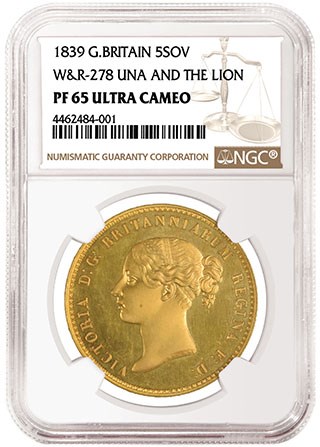
The Iconic 1839 Victoria Una and the Lion £5 Gold Coin Explained
In the annals of numismatic history, few coins command as much reverence and fascination as the 1839 British Gold Coin, famously known as the Victoria Una and the Lion £5 gold piece. This extraordinary coin, struck during the nascent years of Queen Victoria's reign, stands as a testament to the artistry of its time, the power of its monarch, and the enduring allure of rare gold. Often described as "the most beautiful of all English coins," its intricate design and limited mintage have elevated it to legendary status among collectors worldwide. Far more than just a piece of currency, the 1839 Una and the Lion is a miniature sculpture, a historical document, and a symbol of early Victorian Britain.
This article delves into the captivating story behind this iconic coin, exploring its design, its rarity, and what makes it such a prized possession. Whether you're a seasoned numismatist or a curious newcomer, understanding the Una and the Lion offers a glimpse into a rich tapestry of history, art, and unparalleled craftsmanship.
A Masterpiece Unveiled: The Genesis of the 1839 Una and the Lion £5 Gold Coin
The year 1839 marked a pivotal moment for the Royal Mint, as it introduced the first five-pound crown under the young Queen Victoria's reign. What made this particular issue uniquely special was its reverse design: the allegorical depiction of 'Una and the Lion'. This motif, inspired by Edmund Spenser's epic poem The Faerie Queene, portrays Una leading a lion, symbolizing purity, truth, and the gentle strength of the monarch guiding her nation. The lion, a national emblem, respectfully accompanies Una, who is often seen as a representation of Queen Victoria herself, navigating the early challenges of her rule with grace and authority.
The brilliance behind this iconic image is attributed to the master engraver William Wyon, who signed his initial 'W.W.' subtly below the design. Wyon's meticulous attention to detail brought Una's flowing robes, the lion's majestic mane, and the serene landscape to life, creating a three-dimensional effect that was revolutionary for its time. The obverse of the coin features a youthful portrait of Queen Victoria, adding to its historical significance. This combination of a powerful allegorical reverse and a contemporary royal portrait encapsulates the spirit of the era and cemented the coin's place as an artistic triumph.
Historically, the five-pound gold coin, also known as a 'quintuple sovereign', was a denomination rarely intended for common circulation. The first gold quintuple sovereign was issued in 1820, though it's often considered a pattern coin. Proof versions were subsequently issued in 1826, and then again significantly in 1839 as part of complete proof coin sets. The 1839 British Gold Coin iteration featuring Una and the Lion remains the *only* time this specific design was used on a five-pound piece during Victoria's extensive reign, making it a singular achievement in the entire series.
Understanding Rarity and Varieties: Proof vs. Circulation Issues
The inherent rarity of the 1839 Una and the Lion £5 gold coin is a significant factor contributing to its colossal value and desirability. To truly appreciate its scarcity, it's crucial to understand the distinction between 'proof' and 'normal' (non-proof) versions, as well as the historical context of £5 gold coin mintages.
A proof coin is a high-quality sample, struck with specially prepared dies and planchets (coin blanks), often multiple times, to achieve a mirror-like field and frosted devices (the raised design elements). These coins are typically produced in limited numbers for collectors, dignitaries, or as a benchmark for the coin issue, not for general circulation. Many 1839 Una and the Lion coins are magnificent proof examples, often exhibiting a "cameo" effect – a deep contrast between the relief and the background – which further enhances their visual appeal and value. This level of craftsmanship and intentional presentation marks them out as true numismatic treasures.
While the 1839 issue was primarily distributed as proofs, there were also "normal" (non-proof) versions minted. However, records indicate that only in 1839, 1893, and 1902 were ordinary circulation types of the £5 gold coin issued in addition to proof versions. Even these "normal" issues of the 1839 Una and the Lion are exceedingly rare. The limited production numbers for both types mean that encountering an 1839 British Gold Coin of this denomination is an infrequent occurrence, particularly in high grades.
This exclusivity contrasts sharply with the broader history of British coinage. While other £5 gold pieces were minted later in Victoria's reign and beyond (e.g., 1902, 1911, 1937 for proofs), none carried the iconic Una and the Lion design. This design's singular appearance in 1839 firmly establishes its unique place in the pantheon of British numismatics and intensifies its appeal to serious collectors. The meticulous creation and limited availability ensure that each surviving example is a highly sought-after artifact.
Why "The Most Beautiful": Artistic Merit and Market Value
The epithet "the most beautiful of all English coins" is not merely hyperbole; it is a sentiment echoed by experts and enthusiasts alike, stemming from a unique confluence of artistic brilliance, historical significance, and superb craftsmanship. William Wyon's Una and the Lion design transcends typical coin artistry, embodying a blend of classical allegory and contemporary royal symbolism. The intricate details, the balanced composition, and the profound narrative embedded within the reverse side give the coin an almost sculptural quality that captivates observers. This aesthetic superiority, combined with its profound rarity, naturally translates into exceptional market value.
Recent years have seen these magnificent coins fetch staggering sums at auction, cementing their status as blue-chip numismatic investments. For instance, a "near-Choice" grade 1839 Victoria gold proof Una and the Lion £5 cameo, denoting an example in particularly good, though not quite mint, condition, commanded bids well into the hundreds of thousands of dollars. Such high valuations underscore the coin's scarcity and the intense competition among collectors to acquire a piece of this unparalleled artistry. The record-breaking performance of an 1839 British Gold Coin at The Royal Mint's first-ever historic coin auction further highlights its enduring appeal and robust market. These auctions are not just about financial transactions; they are events that celebrate numismatic heritage and the lasting legacy of Wyon's masterpiece.
The factors influencing its value are multi-faceted: its extreme rarity, the unparalleled beauty of Wyon's design, its historical context as an early Victorian issue, and the intrinsic value of its gold content. However, it is primarily its artistic and historical gravitas that propels its price far beyond its precious metal weight. Each coin tells a story, not just of its mintage, but of the era it represents and the hands it has passed through. To delve deeper into its aesthetic appeal, you might be interested in Why the 1839 Una and the Lion Gold £5 is Britain's Most Beautiful Coin.
Collecting the 1839 British Gold Coin: Tips for Enthusiasts
For those aspiring to own or simply learn more about the legendary 1839 British Gold Coin, a thoughtful approach is essential. The market for such high-value, rare items demands diligence and expertise. Here are some practical tips and insights for navigating the world of Una and the Lion £5 gold coins:
- Source Reputable Dealers: Always purchase from well-established and trusted numismatic dealers or auction houses with a proven track record. Counterfeits of highly valuable coins exist, so authenticity is paramount.
- Understand Grading: Condition is king. A coin's grade (e.g., 'Proof-65' or 'Near-Choice') significantly impacts its value. Familiarize yourself with grading standards from recognized organizations like PCGS or NGC, which encapsulate details like surface preservation, strike quality, and aesthetic appeal.
- Distinguish Proofs from Normal Issues: As discussed, proof coins are generally more valuable due to their superior finish and even lower mintage. Ensure you understand which type you are examining or acquiring.
- Historical Context is Key: While the gold content offers a base value, the historical and artistic significance of the 1839 Una and the Lion is what truly drives its premium. Educate yourself on Queen Victoria's reign, William Wyon's other works, and the British numismatic tradition.
- Consider Investment vs. Passion: While these coins hold immense investment potential, many collectors are driven by passion for history and art. Understand your primary motivation for collecting.
- Secure Storage and Insurance: Given their value, proper storage in a secure, climate-controlled environment is crucial. Insuring your acquisition against theft or damage is also highly recommended.
Engaging with the numismatic community, attending reputable coin shows, and continuously learning will enrich your collecting journey. For deeper insights into its market dynamics and what drives its extraordinary value, delve into Unearthing the Value of 1839 Una and the Lion Proof Gold £5 Coins.
Conclusion
The 1839 Victoria Una and the Lion £5 Gold Coin is more than just a rare piece of currency; it is a magnificent artifact that encapsulates artistic genius, historical depth, and numismatic excellence. Its unique design by William Wyon, its status as the only Una and the Lion issue of its kind, and its incredible rarity combine to make it one of the most celebrated and sought-after treasures in the world of coins. For collectors and enthusiasts, the 1839 British Gold Coin represents the pinnacle of Victorian coinage, a timeless symbol of beauty, power, and enduring legacy. Its story continues to inspire awe and fascination, solidifying its place as an undisputed icon of British numismatics.